

TPN
What Is Total Parenteral Nutrition (TPN)?
Total Parenteral Nutrition (TPN) is a specialized intravenous feeding method that delivers a complete, clinically formulated blend of macronutrients and micronutrients directly into the bloodstream, bypassing the gastrointestinal tract entirely. When the gastrointestinal tract is non-functional, obstructed, or inaccessible, TPN serves as the sole source of all caloric and nutritional requirements needed to sustain cellular function, tissue repair, immune response, and metabolic balance.
TPN is administered through a central venous catheter inserted into a large, high-flow vein such as the subclavian vein, internal jugular vein, or via a peripherally inserted central catheter (PICC). In CureCell Compounding Pharmacy, every formulation is compounded under USP 797 sterile standards inside a HEPA-filtered cleanroom, with macronutrient ratios and electrolyte profiles calculated to match each patient’s specific clinical diagnosis and metabolic state.
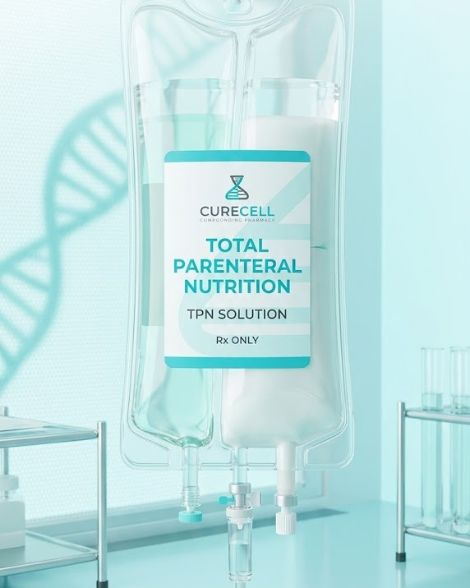
IV Nutrition, Compounded for Clinical Precision
Indications for TPN
TPN is prescribed when the gastrointestinal tract cannot be used safely or effectively and when the anticipated duration of nutritional insufficiency exceeds seven days. Clinical guidelines from both ASPEN and ESPEN recommend TPN initiation in the following conditions:
- Severe gastrointestinal disorders including complete bowel obstruction and paralytic ileus
- Short bowel syndrome where insufficient absorptive surface area remains after surgical resection
- High-output intestinal fistulas where enteral feeding increases fluid and electrolyte loss
- Severe acute necrotizing pancreatitis requiring complete bowel rest
- Inflammatory bowel disease flares where enteral feeding worsens mucosal damage
- Malabsorption syndromes including radiation enteritis and refractory celiac disease
- Oncology patients with gastrointestinal obstruction or chemotherapy-induced mucositis
- Post-surgical patients awaiting return of bowel function
- Premature neonates requiring nutritional support within the first 24 hours of life
- Critically ill ICU patients with multi-organ dysfunction where enteral feeding is unsafe
- Bone marrow transplant patients with severe oral mucositis or gastrointestinal graft-versus-host disease
- Severe burn injuries and polytrauma where metabolic demands exceed enteral capacity
Components of a TPN Formulation
Carbohydrates
Dextrose is the primary energy substrate in TPN and supplies the majority of non-protein calories. It provides approximately 3.4 kcal per gram and is available in concentrations from 5% to 70%, with the final concentration calculated based on the patient’s total daily caloric requirement and prescribed fluid volume. Carbohydrates supply between 50% and 60% of total caloric intake in most adult TPN regimens. Excessive dextrose delivery raises the risk of hyperglycemia, hepatic steatosis, and elevated carbon dioxide production, which stresses respiratory function in ventilated patients. Blood glucose is monitored at regular intervals throughout therapy to maintain target glycemic control.
Proteins
Protein is delivered as crystalline amino acid solutions containing both essential and non-essential amino acids, supporting tissue synthesis, wound healing, immune cell production, enzyme function, and lean muscle mass preservation.
Standard TPN provides 0.8 to 1.5 grams of protein per kilogram of body weight per day for stable adults. Requirements increase to 1.5 to 2.5 g/kg/day in critically ill patients, burn patients, sepsis, and those undergoing continuous renal replacement therapy. Specialty amino acid formulas are available for patients with hepatic encephalopathy or renal failure where standard mixtures would worsen the clinical condition.
Lipids
Intravenous fat emulsions supply essential fatty acids including linoleic acid and alpha-linolenic acid, along with approximately 9 kcal per gram as a secondary caloric source. Lipids account for 20 to 30% of total caloric intake in most TPN regimens. Fish oil-based and mixed-lipid emulsions carry a lower pro-inflammatory profile compared to traditional soybean-only emulsions, which is clinically significant for septic patients and those with systemic inflammatory conditions. Lipid emulsions also serve as the carrier medium for fat-soluble vitamins within the TPN admixture.
Electrolytes
Electrolyte concentrations are calculated based on daily requirements, current serum levels, and ongoing losses from surgical drains or renal excretion. Standard electrolytes in TPN include sodium, potassium, chloride, calcium, magnesium, phosphate, and acetate. Phosphate is critically important in severely malnourished patients being refed, as rapid nutritional repletion causes a sudden cellular uptake of phosphate, potassium, and magnesium from the bloodstream. This condition, known as refeeding syndrome, can produce cardiac arrhythmias, respiratory failure, and severe neurological complications if electrolyte profiles are not carefully managed from the start of therapy.
Vitamins and Trace Elements
A complete multivitamin preparation is added to each TPN bag to prevent deficiency states that develop quickly without oral intake. Fat-soluble vitamins A, D, E, and K are incorporated into the lipid phase. Water-soluble vitamins including thiamine (B1), pyridoxine (B6), cyanocobalamin (B12), folate, and ascorbic acid are dissolved in the aqueous phase. Trace elements including zinc, copper, manganese, selenium, and chromium are included in microgram quantities for enzymatic and biochemical function. Selenium supports antioxidant defense through glutathione peroxidase activity. Copper and manganese require dose reduction in patients with liver disease due to impaired biliary excretion.
Monitoring During TPN Therapy
TPN requires structured biochemical and clinical monitoring throughout the entire course of therapy. Blood glucose is measured every four to six hours during initiation to maintain target glycemic control and reduce infection risk. Serum electrolytes are checked daily during the first week, then every two to three days once stability is confirmed.
Phosphate, magnesium, and calcium are measured daily for the first three days in patients at risk for refeeding syndrome. Liver function tests are assessed weekly to detect TPN-associated liver disease and guide lipid adjustments. Renal function parameters direct protein delivery and total fluid volume calculations. Triglyceride levels are measured in all patients receiving intravenous lipid emulsions, with closer frequency in critical illness where lipid clearance is significantly reduced. Body weight and fluid balance are recorded daily throughout therapy.
Potential Complications of TPN
Central line-associated bloodstream infections (CLABSI) represent the most serious infectious risk. Strict sterile technique during all catheter access and dressing changes is the primary preventive measure. Metabolic complications include hyperglycemia, hypoglycemia upon abrupt discontinuation, refeeding syndrome, electrolyte imbalances, and hypertriglyceridemia. Prolonged TPN use is associated with cholestasis and TPN-associated liver disease, reduced through the use of fish oil lipid emulsions and cyclic infusion protocols. Catheter-related venous thrombosis can compromise venous access over time, and metabolic bone disease may develop in patients receiving TPN over many months.
Sterile Compounding of TPN in CureCell
CureCell prepares every TPN formulation inside a cleanroom that meets USP 797 standards, operating under positive air pressure with HEPA-filtered laminar airflow. The compounding sequence follows a validated order: dextrose is added first, followed by amino acids, then electrolytes and additives, with lipids and vitamins added last to preserve emulsion stability and protect against oxidative degradation. Calcium and phosphate additions are managed within established solubility limits to prevent calcium phosphate precipitation, an incompatibility that carries serious patient safety consequences when undetected.
Every compounded TPN batch undergoes visual inspection, and selected batches are subject to sterility and endotoxin testing. Beyond-use dates are assigned based on USP 797 guidelines, storage conditions, and admixture composition. CureCell pharmacists collaborate with prescribing physicians, registered dietitians, and nursing teams to review TPN orders, identify nutrient-drug interactions, and adjust formulas based on evolving laboratory results. This interprofessional nutrition support model ensures that every patient receiving TPN is part of a clinically managed nutritional intervention directed at measurable therapeutic outcomes.
Have questions?
Get in touch!
TPN
- Prepared under strict sterile conditions
- Delivers nutrients directly into the bloodstream
- Used when oral or digestive feeding is not possible

Sterile & Precisely Compounded
- Prepared in USP 797-compliant cleanrooms with HEPA-filtered laminar airflow
- Validated compounding sequence ensures emulsion stability and patient safety
- Calcium and phosphate managed within strict solubility limits to prevent dangerous precipitation